Opens in a new tab
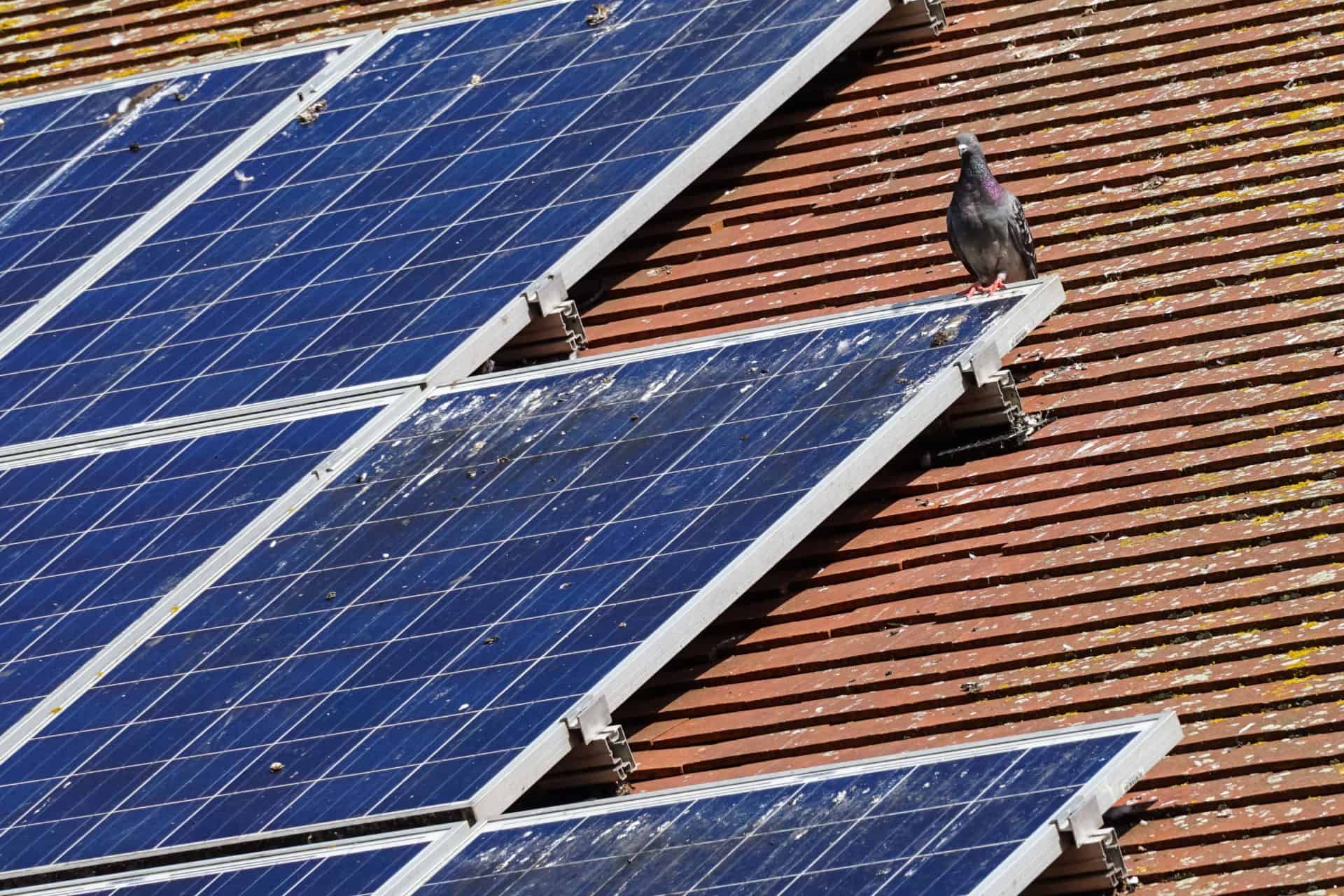
Birds sitting on solar panels on tiled roof of house, solar panels dirty with pigeon droppings.

Solar Panel Bird Proofing in Ipswich

Birds sheltering beneath roof-mounted solar panels can leave nesting material, noise and mess around an array. Hunter Build & Solar Ltd can assess solar panel bird proofing in Ipswich and recommend a suitable way to restrict access beneath the panels. We consider the roof, mounting system and any signs of nesting before planning work.

Get A Free Quote

Google reCaptcha: Invalid site key.

Protect the Space Beneath Your Solar Panels

The gap between a solar array and a roof is useful for ventilation but can also attract birds seeking shelter. On some properties, droppings build up around gutters or terraces, while nesting material gathers close to cables and mounting components. The right response is to inspect the installation rather than attach a product without checking the roof and wildlife situation.

Our team considers the accessible edges of the array, roof covering, fixings and safe access. Where appropriate, a compatible perimeter barrier can reduce access beneath the panels while allowing the installation to ventilate and shed water as intended. The exact method depends on the panel frame, mounting arrangement and roof condition. We explain the options and the proposed work after a survey.

If you have also noticed lower output or a warning on the inverter, tell us at the outset. Bird proofing addresses access beneath the array; it cannot diagnose a separate electrical fault. Our solar panel repair service covers fault investigation.

Contact Us

Why a Survey Matters Before Proofing

Solar arrays differ in size, roof pitch and distance from the roof covering. Some leave easy entry points along several edges, while others have awkward corners, roof windows or access constraints. A survey helps establish how birds are entering and whether surrounding guttering or roof details need attention as part of the plan.

It is also essential to check for active nests. Wild birds and their nests are protected under the Wildlife and Countryside Act 1981 while the nests are in use or being built. Work must be planned around the law and the species present. We would assess the situation and defer proofing where necessary rather than disturb an active nest. Government guidance on wild bird licences explains why exclusion work needs care.

The condition of the solar installation matters too. Loose cabling, damaged panels or roof defects should be identified before any perimeter work is fixed. If a system needs broader attention, solar panel maintenance may be the right accompanying service.

Birds sitting on solar panels on tiled roof of house, solar panels dirty with pigeon droppings.

Our Approach to Bird Proofing

We first ask about the birds you have seen, where activity occurs and whether there are signs of an active nest. Photographs taken safely from ground level can help us understand the layout. We then assess roof access, the panel perimeter, the mounting system and the likely entry points.

If the location is suitable and wildlife considerations allow work to proceed, we recommend a compatible proofing method and explain its position around the array. Materials must be secured without damaging panel frames, cables or roof coverings. We also consider whether debris can be removed safely and lawfully before fitting; that depends on what is present beneath the panels.

After installation, we check the perimeter and explain what to watch for. An effective barrier may reduce future access beneath the array, although no roof product can guarantee that birds will never land on a property. Our advice focuses on the condition of your actual installation.

Contact Us

Why Choose Hunter Build & Solar Ltd?

Because we install solar PV equipment, we understand why airflow, mounting and safe access matter when working around an existing array. Hunter Build & Solar Ltd provides a direct point of contact through its in-house Suffolk team. We will explain the survey findings and what the proposed protection can achieve.

Where another issue is found, we can discuss it separately. That might involve a damaged cable, an inverter warning or an array whose generation has changed. Bird proofing should be a considered part of caring for the system, not a substitute for the electrical work it needs.

Bird Proofing Across Ipswich and Nearby Areas

We welcome enquiries from Ipswich, Kesgrave, Martlesham, Rushmere St Andrew, Claydon, Copdock and nearby villages. For a new system, our solar panel installers in Ipswich page explains how we assess a roof and plan a complete installation. If you are considering an upgrade to use more of the electricity you generate, explore solar battery installation in Ipswich.

Tell us where you have noticed bird activity and whether the system is otherwise working normally. Request a survey so we can recommend the right next step.

Contact Us

Frequently Asked Questions

The space under a roof-mounted array can provide shelter from wind and rain and an appealing place to perch or build a nest. Whether it attracts birds depends on the roof shape, panel clearance and surrounding environment. Noise, droppings and material near the gutter may indicate activity, but it is important to establish what is present before work begins. A ground-level photograph may help us understand the situation; do not lift a panel or reach beneath an array yourself.

An appropriate method should be selected for the particular panels and mounting arrangement, then fitted without obstructing ventilation or compromising the roof covering. Poorly chosen fixings or an incorrectly fitted barrier could cause problems. That is why we assess the array and explain the intended attachment method before work starts. Existing damage or a manufacturer requirement may affect what is suitable. If your system is under warranty, keep the product and installation paperwork available for the survey.

Active nests require particular care. In general, wild bird nests are protected while in use or being built, so access cannot simply be blocked while birds are using the space. Timing and the next steps depend on the species and circumstances. We assess what can be seen safely and plan work only when it can be done lawfully. Do not attempt to remove nesting material or seal the gap yourself. The Wildlife and Countryside Act 1981 sets out the relevant protections.

Perimeter protection is designed to reduce access to the space beneath a solar array. It does not prevent birds from flying over the property, perching elsewhere or leaving droppings on exposed surfaces. The benefit depends on how completely the entry points can be addressed and whether other roof features also provide shelter. We can explain the likely outcome after inspecting your roof. If soiling is the main concern, it may be useful to discuss a professional maintenance check rather than assume bird proofing alone will solve it.

It depends on the condition of the array and what is beneath it. Visible debris, blocked gutters or soiling may be worth addressing when safe access is arranged, but cleaning is not automatically required for every system. Any removal of nesting material must also comply with wildlife law. A survey allows us to separate ordinary upkeep, proofing and any repair work. The Energy Saving Trust’s maintenance advice offers useful background on panel care.

It may be possible to consider a suitable barrier during the design of a new solar installation, subject to the roof, panel system and local circumstances. Discuss bird activity with the installer before the panels are fitted so the mounting and access can be considered together. That does not remove the need to assess any active nests or wildlife constraints. If you are planning a new system in Suffolk, our Ipswich solar installation page explains the wider survey and design process.