
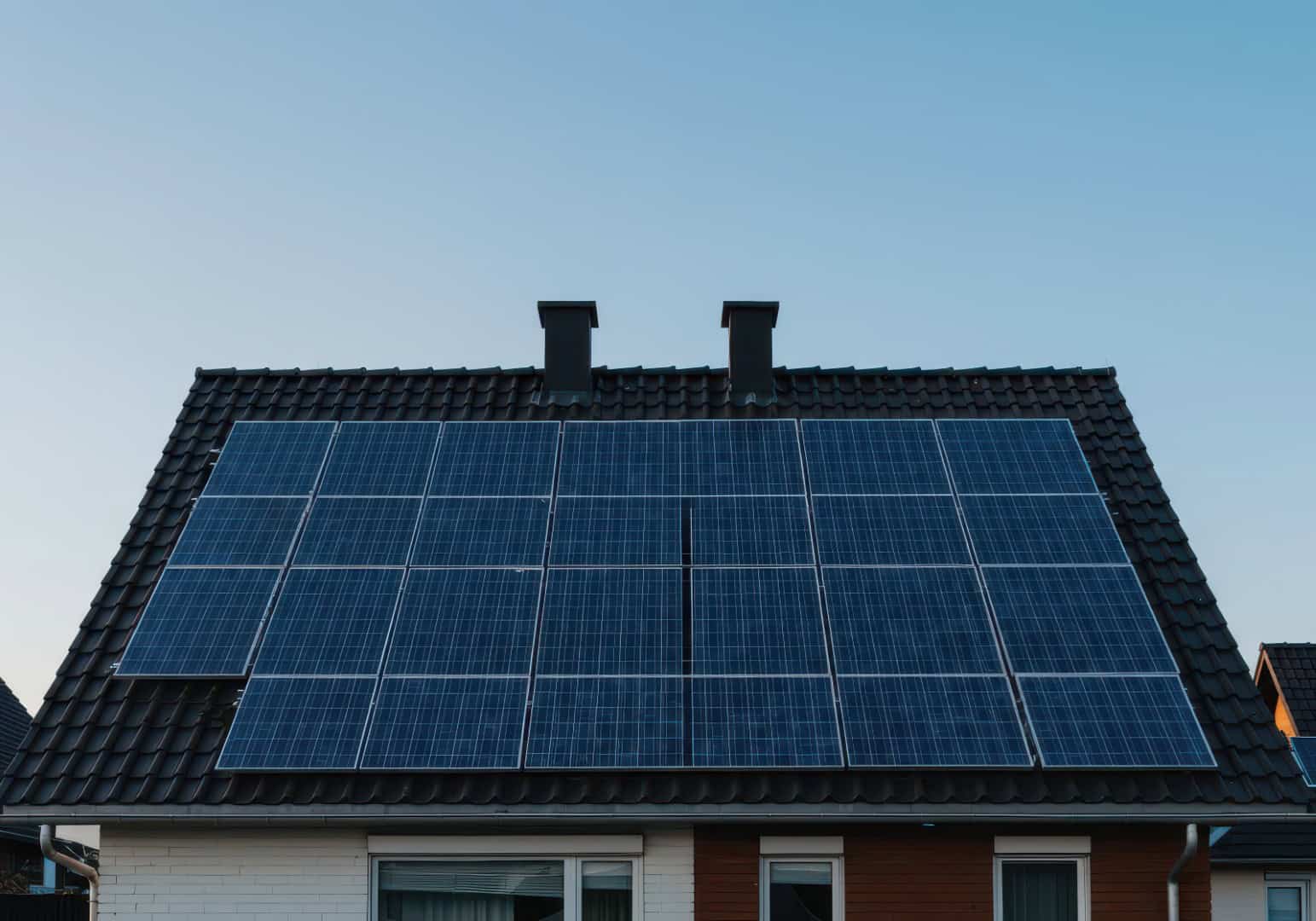
If you are considering solar, the first question is often how many panels will fit on the roof. The more useful question is how much electricity you use, when you use it and what the roof can generate. A small household with an electric car may need a different system from a larger household with low daytime consumption. The number of bedrooms is a starting point for a conversation, not a reliable sizing method.
The Energy Saving Trust says a typical home system of around 4.5 kilowatt peak (kWp) uses about 12 panels and 20 to 30 square metres of roof. That is a broad example, not a recommendation for every home. Modern panels come in different sizes and ratings, and a survey may show that fewer higher-rated panels, a split layout or a smaller array is more suitable. Here is how to work out what matters for your property.
Start with your annual electricity use
Find a recent electricity bill or log into your supplier account and look for annual consumption in kilowatt hours (kWh). This tells you how much electricity the household has used over a year. It is different from kWp, which describes the solar array’s rated capacity under standard test conditions. An array’s real output varies with daylight, season, direction and shading.
Consider what makes your current figure unusual. Have you moved in recently? Is someone now working from home? Are you planning to replace a gas hob, add air conditioning or buy an electric vehicle? Those changes can affect the electricity you expect to use over the life of the system. A good design should explain the assumptions behind its estimate rather than simply match last year’s bill to a standard package.
This does not mean the system must generate every kilowatt hour you use. Solar output peaks at different times from some household demand, and the roof may not have room for a system that matches annual consumption. The aim is a sensible balance between likely generation, cost and how you will use the power.
Look at when you use electricity
Two households with the same annual consumption can gain different value from the same array. If you are at home during the day, solar may run appliances, computers or other equipment as it generates. If the home is empty until evening, a larger share may be exported unless you can shift some use or store it.
For example, a dishwasher or washing machine run while panels are producing can increase direct use of solar electricity. An EV charged mainly after dark will not use midday generation directly without a storage or charging strategy. These habits affect the financial case as well as the most useful system design. An installer should ask about the daily pattern, not only the annual total.
Excess electricity can be exported under an eligible Smart Export Guarantee arrangement. Supplier tariffs and conditions differ, so do not assume that export income will equal the value of electricity you avoid buying. Ofgem’s Smart Export Guarantee guidance explains the framework. A solar battery may help you use more generation in the evening, but its capacity and cost need a separate assessment.
Measure usable roof space, not just roof size
A roof that looks large from the street may have less usable space after allowing for chimneys, rooflights, dormers, edge distances and maintenance access. The shape of the remaining area also determines which panel dimensions fit. The structural condition and mounting arrangement must be suitable. If the covering is nearing the end of its life, it is worth discussing roof work before mounting an array that may remain in place for decades.
Panels need a sensible layout, not the greatest possible number squeezed into every gap. Additional panels on a heavily shaded corner may contribute much less than panels on a clear slope. Roof access and safe installation also influence what can be proposed. A site survey can turn a rough measurement into an actual layout and quotation.
An east- or west-facing roof should not automatically be ruled out. Such arrays can generate worthwhile electricity and spread generation towards morning or afternoon. The Energy Saving Trust notes that output from an east- or west-facing system may be lower than from an equivalent south-facing one, so the direction belongs in the estimate. Homes with two suitable slopes may benefit from a design that uses both.
Understand the effect of shading
Nearby trees, chimneys and neighbouring buildings can shade part of the roof at particular times. Shade can change across the seasons as the sun’s height changes. A tree that seems irrelevant on a summer visit may cast a longer shadow in winter, while deciduous trees can behave differently once leaves appear.
A good survey identifies the shaded sections and how they affect the proposed arrangement. Depending on the design, alternative panel positions or suitable electronics may help manage uneven conditions. No component can create sunlight where there is none, however, and a shaded installation should never be sold on an unqualified promise of ideal output. Ask the installer to show you the assumptions in the generation estimate.
Panel rating changes the count
The figure in watts on a panel specification describes its rated output under standard conditions. If a proposal contains ten 450-watt panels, its nominal array capacity is 4.5 kWp. Twelve 375-watt panels would have the same nominal capacity. Their physical dimensions and actual performance on your roof may differ, so the count alone does not tell you which proposal is better.
For a simple illustration, suppose a roof can fit eight panels rated at 450 watts. That is a 3.6 kWp array on paper. It does not mean the home will continuously receive 3.6 kilowatts of electricity or generate the same amount every day. An annual generation estimate must account for the site and local conditions. Compare proposals using projected output, roof layout, equipment specification and total installed cost, not just panel numbers.
The inverter also has to suit the chosen array. If you intend to add battery storage later, discuss that before selecting an inverter, because compatibility and system architecture can affect future options. Our solar battery installation page explains how storage can work alongside generation.
Should you fit as many panels as possible?
Sometimes extra capacity makes sense, especially if you expect electricity demand to rise. Yet an array that covers every available roof space is not automatically the best use of a budget. You need to weigh up the marginal cost of extra panels, the likely annual generation from their position and what you can use or export. A smaller well-placed system may be better than adding modules in poor light.
There may also be network connection considerations. Depending on the design, the installer may need to notify the distribution network operator or obtain approval before connection. The specification and programme should reflect those requirements. Planning rules vary by property: many home installations in England are permitted development, but exceptions and other consents can apply. See the Planning Portal’s solar guidance if your roof has unusual constraints.
What about a battery and an electric car?
A battery can store some electricity generated when the household is not using it, then supply it later within the equipment’s capabilities. It may be useful if evening consumption is high, but a battery should be sized against realistic surplus generation and demand. A very large battery is of limited use if there is rarely enough spare solar electricity to charge it, unless a separate tariff strategy forms part of the plan.
An electric car can add substantial annual electricity demand, yet when you charge matters. Someone charging at home in daylight may be able to use a portion of solar generation directly. Someone returning after sunset will need a different arrangement. If an EV is planned, mention it at the survey and explore EV charger installation alongside the solar design.
Ask for a design you can understand
When comparing quotations, request the proposed panel count and rating, nominal system capacity, roof layout, estimated annual generation, inverter details and an explanation of shading assumptions. Ask how much generation is likely to be used in the home, how export has been treated and which costs are included. A useful quote should make it possible to see why the recommended design suits your specific property.
For homeowners around Ipswich, Hunter Build & Solar Ltd starts with a roof and usage assessment. Our solar panel installers in Ipswich page describes the survey, installation and handover process. If you want a system planned around your electricity use, contact our team for a tailored quotation.